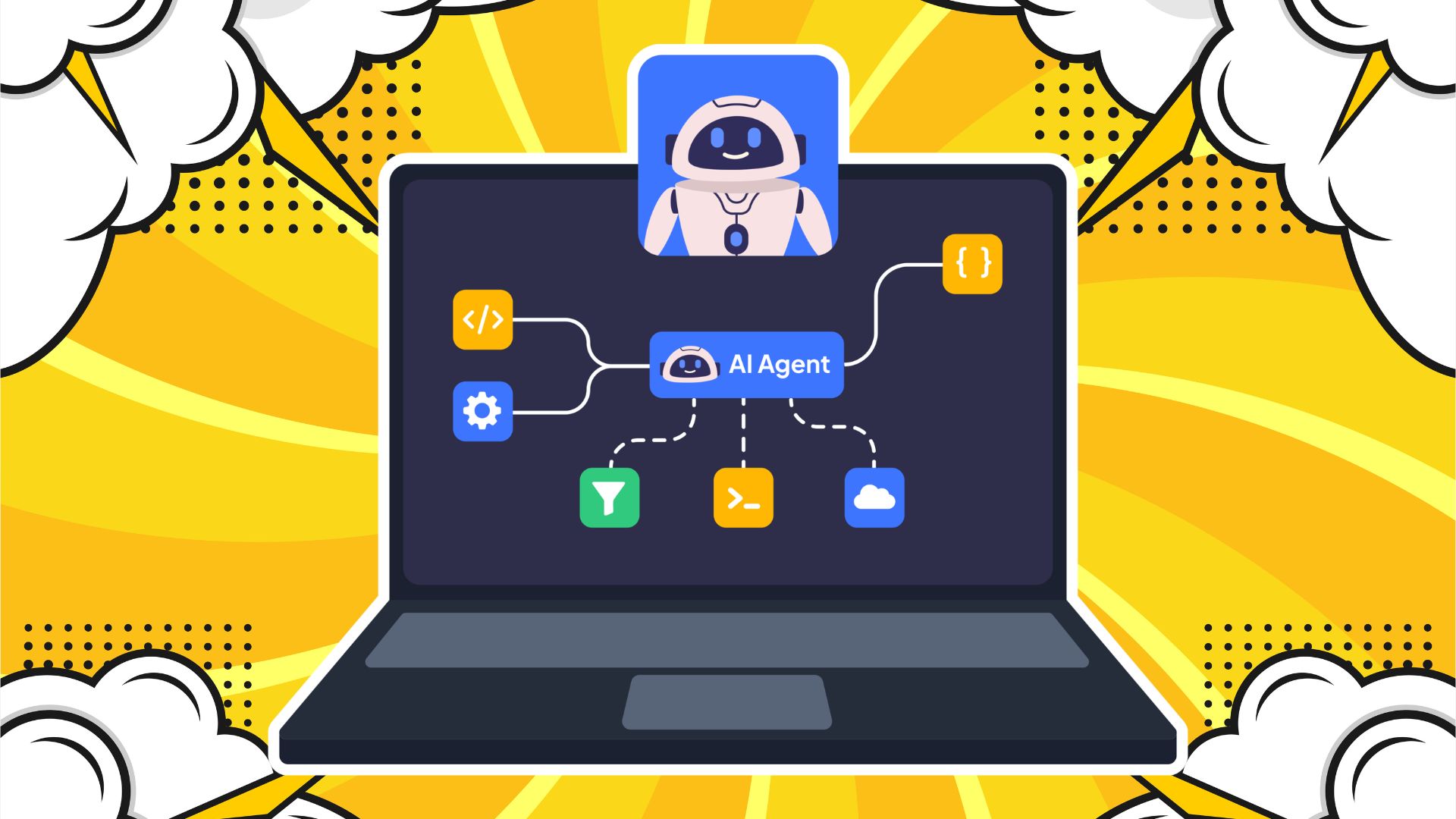
Mistras Group has deployed Aimie, an autonomous AI cash collection agent developed by Sidetrade, to automate parts of its Order-to-Cash operations. The system is designed to engage customers, qualify invoices and adjust collection strategies based on payment behavior, reflecting a broader shift from rules-based finance automation toward agentic AI.
Mistras Group is adding an autonomous AI agent to one of the most operationally important functions in corporate finance: cash collection.
The industrial asset integrity and laboratory testing company has introduced Aimie, an AI cash collection agent developed by Sidetrade, as part of its Order-to-Cash operations.
Aimie is designed to engage customers, assess invoices and adapt collection strategies autonomously. Instead of functioning as a conventional digital assistant that waits for an employee to initiate an action, the agent is intended to operate continuously across customer accounts and adjust its approach based on available context and payment behavior.
The deployment highlights a broader change taking place in enterprise finance. For years, organizations have relied on ERP systems, rules-based automation and workflow software to manage receivables and collections. Those systems remain important, but they can struggle when finance teams have to manage large customer portfolios involving different payment patterns, disputes and communication requirements.
Agentic AI is increasingly being positioned as an additional operational layer.
For finance organizations, the appeal is straightforward: an AI agent can potentially handle repetitive interactions while allowing employees to concentrate on exceptions, negotiations and decisions requiring human judgment.
Sidetrade has built Aimie specifically around Order-to-Cash (O2C) processes. The company says the agent can autonomously orchestrate calls across thousands of customer accounts, learn from payment behavior and live interactions, and make adjustments through the Sidetrade platform’s case-management capabilities.
The company describes Aimie as an autonomous coworker rather than simply a conversational assistant.
That distinction matters because the technology is designed to move beyond generating recommendations. An agentic system can interpret information, determine the next step and execute defined actions within an approved operating environment.
In accounts receivable, those actions can include customer outreach, invoice qualification and collection follow-up.
The potential benefit is not limited to reducing administrative work. Faster and more consistent collections can improve working capital by reducing the time between invoicing and payment.
At the same time, deploying AI into financial operations introduces governance requirements. Collection communications can affect customer relationships, contractual obligations and dispute handling. Finance teams therefore need controls around the actions an agent is permitted to take, the policies it must follow and the circumstances in which a human should intervene.
Sidetrade says Aimie is designed to deliver policy-aligned execution and operate within its O2C platform. The company’s architecture includes SAFE, the Sidetrade Agentic Framework for Enterprise, which it uses to support autonomous AI agents across Order-to-Cash processes.
The company also says its AI capabilities are supported by a proprietary O2C Data Lake containing information from nearly $10 trillion in B2B transactions and close to 45 million buying companies.
Those figures are Sidetrade’s own claims and describe the data available within its proprietary environment. The company says the data is used to train specialized models for monitoring, analysis and autonomous decision-making across the O2C cycle.
The scale of the underlying data is potentially significant because payment behavior varies considerably between industries, customer types and markets. Historical transaction data can provide context that a general-purpose AI model would not have when determining how to approach a particular receivable.
That specialized-data approach reflects a broader trend in enterprise AI. Rather than relying exclusively on general-purpose models from providers such as Microsoft, Google or Amazon, companies are increasingly combining foundation models with proprietary operational data and domain-specific workflows.
Finance is an especially attractive environment for that model because many processes are structured around high volumes of repeatable transactions.
Accounts receivable is also becoming a focus for fintech and enterprise software vendors seeking to automate working-capital management. Companies across financial technology are applying AI to invoice processing, payment reconciliation, fraud detection, credit assessment and collections.
The competitive question is therefore moving beyond whether a vendor offers an AI assistant. Enterprises increasingly need to determine whether an AI system can operate reliably inside existing financial workflows and produce measurable business outcomes without weakening controls.
Mistras Group’s deployment provides an example of how agentic AI can be applied to a narrowly defined financial process rather than attempting to automate the entire finance function at once.
For CFOs and finance leaders, that incremental approach may prove more practical. Cash collection contains repetitive interactions that can potentially be automated, while complex disputes and sensitive customer relationships can remain subject to human oversight.
The broader opportunity is to transform Order-to-Cash from a collection of scripted workflows into a continuously adapting operational system.
Whether autonomous collection agents can consistently improve cash conversion while maintaining customer relationships and financial controls will ultimately determine how widely the technology is adopted.
For now, Mistras Group’s adoption signals that agentic AI is moving beyond experimentation and into specific enterprise finance processes where automation can have a direct impact on working capital.
Market Landscape
Order-to-Cash automation is becoming an important segment of enterprise fintech as companies look for ways to improve working capital without proportionally increasing finance headcount.
Traditional ERP and workflow automation remain the foundation, while AI is increasingly being layered on top to interpret customer behavior, prioritize accounts and automate communications. The next stage is agentic AI that can execute predefined actions autonomously within governed workflows.
For GlobalFinTechEdge, the development is relevant to Financial Technology, Digital Payments, Embedded Finance Infrastructure and Banking Technology Innovation, particularly as AI becomes embedded deeper into corporate financial operations.
Top Insights
- Mistras Group has deployed Sidetrade’s Aimie AI agent to automate customer engagement and cash collection within its Order-to-Cash operations.
- Aimie is designed to analyze payment behavior and dynamically adjust collection strategies rather than follow only predefined rules.
- Sidetrade says its proprietary O2C Data Lake represents nearly $10 trillion in B2B transactions and almost 45 million buying companies.
- The deployment illustrates how agentic AI is moving from finance assistants toward autonomous execution within narrowly defined operational workflows.
- Governance remains critical because automated collection actions can affect customer relationships, payment disputes and financial controls.
Get in touch with our fintech expert