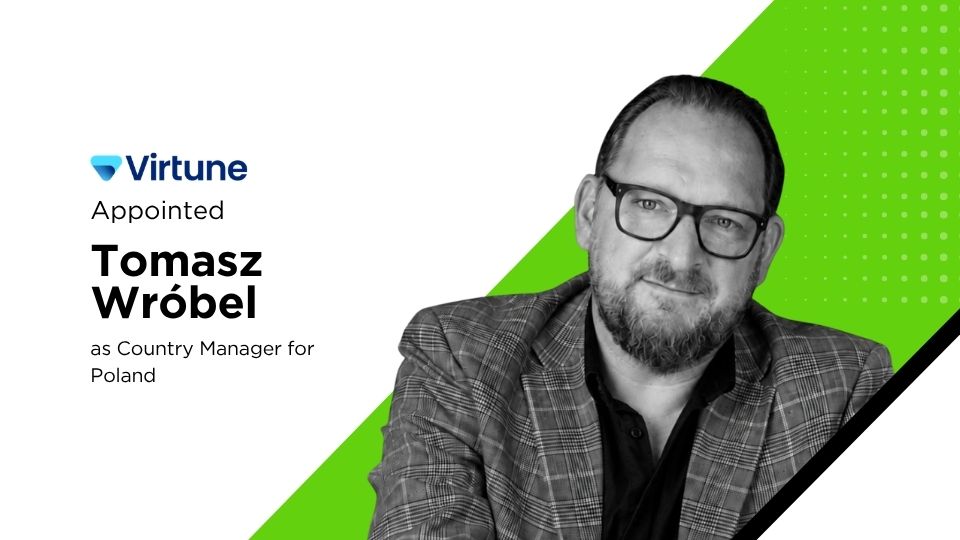
Swedish digital asset manager Virtune is expanding its footprint in Poland with the appointment of Tomasz Wróbel as Country Manager, putting local distribution and investor education at the center of its European growth strategy. The move comes months after Virtune listed what it describes as Poland’s first spot crypto exchange-traded products (ETPs) on the Warsaw Stock Exchange, giving investors regulated-market access to physically backed digital-asset products denominated in Polish złoty.
Virtune makes Poland a bigger part of its European crypto strategy
The European crypto market is moving into a more institutional phase, and Virtune is betting that regulated investment products will be an important part of that transition.
The Sweden-based digital asset manager has appointed Tomasz Wróbel, a financial-services executive with more than two decades of industry experience, to lead its operations in Poland. Wróbel most recently served as Sales Director at BETA ETF, where he worked on the development and distribution of exchange-traded funds in the Polish market.
His appointment comes less than a year after Virtune entered Poland and began building a local crypto ETP business through the Warsaw Stock Exchange (GPW).
In February 2026, Virtune listed four products on GPW: Virtune Bitcoin Prime ETP, Virtune Staked Ethereum ETP, Virtune XRP ETP and Virtune Staked Solana ETP. The company subsequently added the Virtune Coinbase 50 Index ETP and Virtune Crypto Altcoin Index ETP.
The portfolio now comprises six listed crypto ETPs on the Polish exchange.
The development is significant because exchange-listed investment products can give investors exposure to digital assets through a familiar securities-market structure rather than requiring them to open accounts directly with cryptocurrency exchanges or manage digital wallets themselves.
Crypto moves closer to traditional investment infrastructure
The distinction between buying cryptocurrency directly and investing through a regulated ETP is important.
A crypto ETP packages exposure to digital assets into a security that can be traded through an investment account, subject to the rules and infrastructure of the relevant market. For traditional investors, that can simplify access, custody and portfolio administration.
It also brings crypto closer to the distribution channels already used by the investment industry.
Banks, online brokers, wealth managers, financial advisers and institutional investment platforms can potentially incorporate exchange-listed products into existing workflows. That is precisely the network Virtune says Wróbel will focus on developing.
The company plans to deepen relationships with Polish brokers, banks, advisers, institutional investors and retail investors while increasing awareness of regulated crypto investment products.
This reflects a broader European shift toward integrating digital assets with conventional financial infrastructure.
Bitcoin and other cryptocurrencies have historically been associated with specialist exchanges and self-custody. ETPs, exchange-traded funds and other regulated investment vehicles are changing that distribution model by bringing digital assets into established securities markets.
Poland becomes a competitive crypto investment market
Poland is an increasingly important market in that transition.
The Warsaw Stock Exchange is one of Central and Eastern Europe’s major capital markets, making it a strategically useful venue for financial firms seeking access to Polish investors.
Virtune’s initial product lineup also shows how the crypto investment market is broadening beyond Bitcoin.
The company’s GPW offering includes exposure to Ethereum, XRP and Solana, as well as index-based products. Its Coinbase 50 Index ETP provides diversified exposure to a basket of crypto assets rather than concentrating on one token.
That expansion mirrors a broader evolution in digital-asset investing. Institutional investors increasingly have access to products spanning individual cryptocurrencies, diversified indexes, staking-linked exposure and other structured strategies.
Competition is consequently moving beyond the underlying asset.
Asset managers now compete on regulatory structure, liquidity, distribution, custody, fees, transparency and investor education.
Established financial companies such as BlackRock, Fidelity and Franklin Templeton have also brought digital-asset products into mainstream investment markets, particularly through spot Bitcoin and Ethereum exchange-traded products in the United States and other jurisdictions.
For smaller specialist managers such as Virtune, local market expertise and distribution relationships become important ways to compete.
Investor education could become a differentiator
Wróbel’s appointment also highlights a less visible challenge in the crypto investment market: education.
Crypto ETPs may make access easier, but they do not eliminate the complexity or risk associated with digital assets. Investors still need to understand price volatility, product structure, underlying-asset exposure, liquidity and the difference between spot exposure and products that incorporate staking or index methodologies.
Virtune says market education will be a central part of Wróbel’s role.
That could become increasingly important as crypto products move from specialist investors toward broader retail distribution.
The European Union’s Markets in Crypto-Assets (MiCA) regulatory framework is also changing the environment for digital-asset businesses by creating a more harmonized regulatory framework for crypto-asset activities across EU member states.
However, a regulated distribution framework does not make crypto assets low-risk investments. For enterprise investment platforms and advisers, product due diligence and suitability remain essential.
The next phase is distribution
Virtune’s Polish expansion ultimately reflects a larger change in financial technology.
Crypto infrastructure is increasingly being connected to conventional capital markets rather than operating as a parallel financial system. Exchange listings, regulated ETP structures and established brokerage channels allow investors to access digital assets using infrastructure they already understand.
The appointment of a senior ETF-industry executive therefore has significance beyond Virtune’s internal organization.
It suggests the company sees Poland not simply as another country in its geographic expansion, but as a market where crypto investment products can be distributed through established financial institutions.
The next challenge will be turning the initial GPW listings into sustained investor demand.
That will depend on market conditions, product liquidity, regulatory developments and Virtune’s ability to build relationships with the brokers and advisers that control much of the country’s investment distribution.
If the strategy works, Poland could become an important test case for how specialist digital-asset managers transition from crypto-native distribution toward mainstream European investment infrastructure.
Market Landscape
European digital-asset markets are becoming increasingly integrated with traditional financial infrastructure. The MiCA framework is providing a harmonized regulatory foundation for many crypto-asset activities across the European Union, while regulated exchange-traded products are giving investors another route to digital-asset exposure.
The competitive landscape includes specialist firms such as Virtune alongside global asset managers including BlackRock, Fidelity and Franklin Templeton. Crypto exchanges such as Coinbase remain important infrastructure providers, while traditional banks, brokers and wealth-management platforms increasingly determine how easily investment products reach end customers.
For Poland, the Warsaw Stock Exchange provides an established securities-market distribution channel. The key commercial question for Virtune will be whether regulated crypto ETPs can achieve meaningful adoption among Polish retail and institutional investors.
The market is also becoming more sophisticated. Bitcoin exposure remains central, but investors can increasingly access diversified crypto indexes, alternative assets and staking-related products.
Top Insights
- Virtune has appointed Tomasz Wróbel to lead Poland, strengthening local distribution as regulated crypto ETPs enter established European investment channels.
- Six Virtune crypto ETPs now trade on Warsaw’s exchange, covering Bitcoin, Ethereum, XRP, Solana and diversified cryptocurrency indexes.
- The strategy moves crypto closer to traditional finance, allowing investors to access digital assets through exchange-listed securities rather than direct cryptocurrency ownership.
- ETF expertise is becoming strategically valuable, as digital-asset managers compete for broker, bank, adviser and institutional distribution relationships.
- Investor education remains critical, because regulated crypto products simplify access but do not remove volatility, liquidity or underlying-asset risks.
Get in touch with our fintech expert