





Payward Elevates Insider Robert Moore to CFO Amid Platform‑Scale Expansion
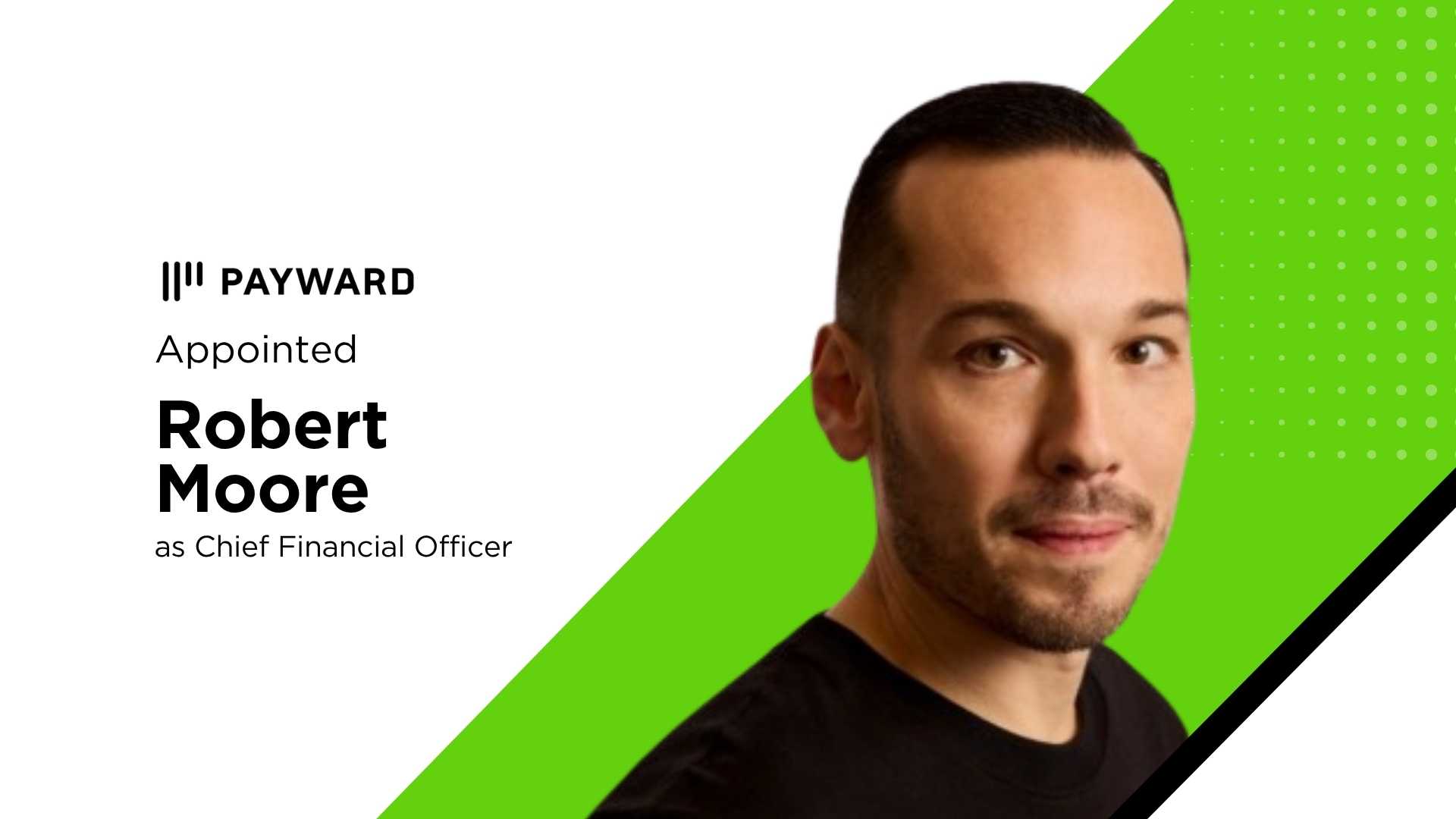
Payward, the parent company behind the Kraken crypto exchange and a suite of trading tools, announced today that Robert Moore will assume the role of chief financial officer effective immediately. The move signals a deliberate shift toward internal succession, as the firm seeks to pair deep institutional knowledge with the financial stewardship required for a platform that now spans several regulated services.
An Insider Takes the Helm
Moore’s tenure at Payward began more than four years ago, during which he progressed through a series of senior finance positions before taking charge of corporate development. In that capacity, he oversaw the acquisition and subsequent integration of NinjaTrader, a move that expanded Payward’s reach into the retail‑trader market. The integration effort required not only the alignment of technology stacks but also the harmonization of compliance frameworks across jurisdictions—a task Moore managed while building the financial architecture that underpins the company’s next growth phase.
“We promote the people who stayed,” said Arjan Sethi, co‑CEO of Kraken and Payward. “We invest in those who already understand the machine and let institutional knowledge compound. The returns are non‑linear — and they are not available on the open market.”
Sethi’s comment captures the strategic calculus behind the appointment: rather than embarking on a costly external search, Payward chose to leverage an executive already versed in the firm’s risk profile, operational tempo, and long‑term capital allocation philosophy.
A Track Record Built on Regulated Finance
Before joining Payward, Moore accumulated fifteen years of senior finance and operational experience at firms including Betterment, Workframe, and Credit Suisse. Those roles equipped him with a broad technical toolkit—ranging from asset‑allocation modeling to cross‑border settlement processes—but Payward’s leadership stresses that expertise alone does not differentiate a CFO in this context. The differentiator, according to internal sources, is the “institutional memory” that only a long‑standing insider can provide.
Moore’s background in regulated environments is especially pertinent as Payward’s platform, formalized in February 2026, now incorporates a suite of services: the Kraken exchange, NinjaTrader, Breakout, xStocks, and the CF Benchmarks analytics engine. Each component operates under distinct licensing regimes, from U.S. commodity futures oversight to European MiFID‑II requirements. The CFO will therefore need to navigate a mosaic of regulatory expectations while ensuring that financial reporting remains cohesive across the ecosystem.
The Platform as a Long‑Duration Asset
Payward’s recent consolidation of its product line into a single, multi‑service platform marks a strategic pivot from a collection of stand‑alone offerings to a “long‑duration asset.” In practice, this means the company must evaluate decisions not merely on immediate earnings impact but on the present value of initiatives whose payoff may not materialize for three to five years.
Financial leaders in the fintech sector often grapple with this temporal mismatch. Traditional banking models can rely on relatively stable balance sheets, whereas a platform that blends spot crypto trading, futures contracts, and algorithmic brokerage services must forecast cash flows across disparate risk horizons. Moore’s mandate will involve refining capital allocation models to reflect the extended lag between investment and revenue realization—particularly as Payward continues to expand into new market segments such as institutional custody and decentralized finance (DeFi) integration.
Talent Retention Over Market Hunting
Executive searches in the fintech arena frequently prioritize external talent, especially when firms aim to import best‑practice governance structures. Payward’s decision to look inward challenges that paradigm. By promoting a veteran who already “understands the machine,” the company sidesteps the onboarding curve that can span months for an outsider to grasp the nuances of a complex, regulated platform.
Industry analysts note that such a talent‑first approach can yield “non‑linear” returns, as Sethi described. The cost savings from avoiding a protracted headhunt, combined with the immediate availability of a CFO who can hit the ground running, may translate into faster execution on strategic initiatives—ranging from product launches to capital‑raising rounds.
Implications for the Competitive Landscape
Payward’s move arrives at a time when the broader crypto‑exchange market is consolidating. Competitors such as Binance and Coinbase have both pursued aggressive acquisitions and internal promotions to shore up their financial leadership. By opting for an insider, Payward signals confidence in its existing governance framework and a desire to maintain continuity as it scales.
The appointment may also influence how investors view Payward’s risk profile. A CFO with deep operational insight can provide more granular reporting to stakeholders, potentially reducing perceived volatility in earnings forecasts. Moreover, Moore’s prior experience at Betterment—a pioneer in robo‑advisory services—could inform Payward’s push into automated wealth‑management tools, an area that remains under‑penetrated among crypto‑centric firms.
Regulatory Outlook
Given the platform’s multi‑product composition, the CFO will be central to Payward’s compliance strategy. The firm must satisfy regulators across multiple domains: anti‑money‑laundering (AML) protocols for the exchange, derivatives reporting for futures contracts, and data‑privacy mandates for its analytics services. Moore’s track record of operating in regulated environments suggests he will be well‑positioned to coordinate cross‑functional compliance teams, ensuring that financial disclosures align with the expectations of bodies such as the U.S. Commodity Futures Trading Commission (CFTC) and the European Securities and Markets Authority (ESMA).
Looking Ahead
Moore’s appointment is effective immediately, and he will inherit a finance organization that has recently undergone a restructuring to support the platform’s expanded scope. Early priorities are expected to include:
- Standardizing reporting across all product lines to provide a unified view of revenue, cost of goods sold, and risk exposure.
- Refining capital‑allocation models that factor in the long‑term nature of platform investments, especially those with a three‑to‑five‑year horizon.
- Strengthening regulatory liaison functions to keep pace with evolving global fintech oversight.
- Driving cost‑efficiency initiatives without compromising the robustness of the platform’s technology stack.
If Moore can translate his internal knowledge into actionable financial strategy, Payward may solidify its position as a vertically integrated fintech conglomerate capable of competing with both legacy financial institutions and newer, venture‑backed crypto platforms.
Get in touch with our fintech expert