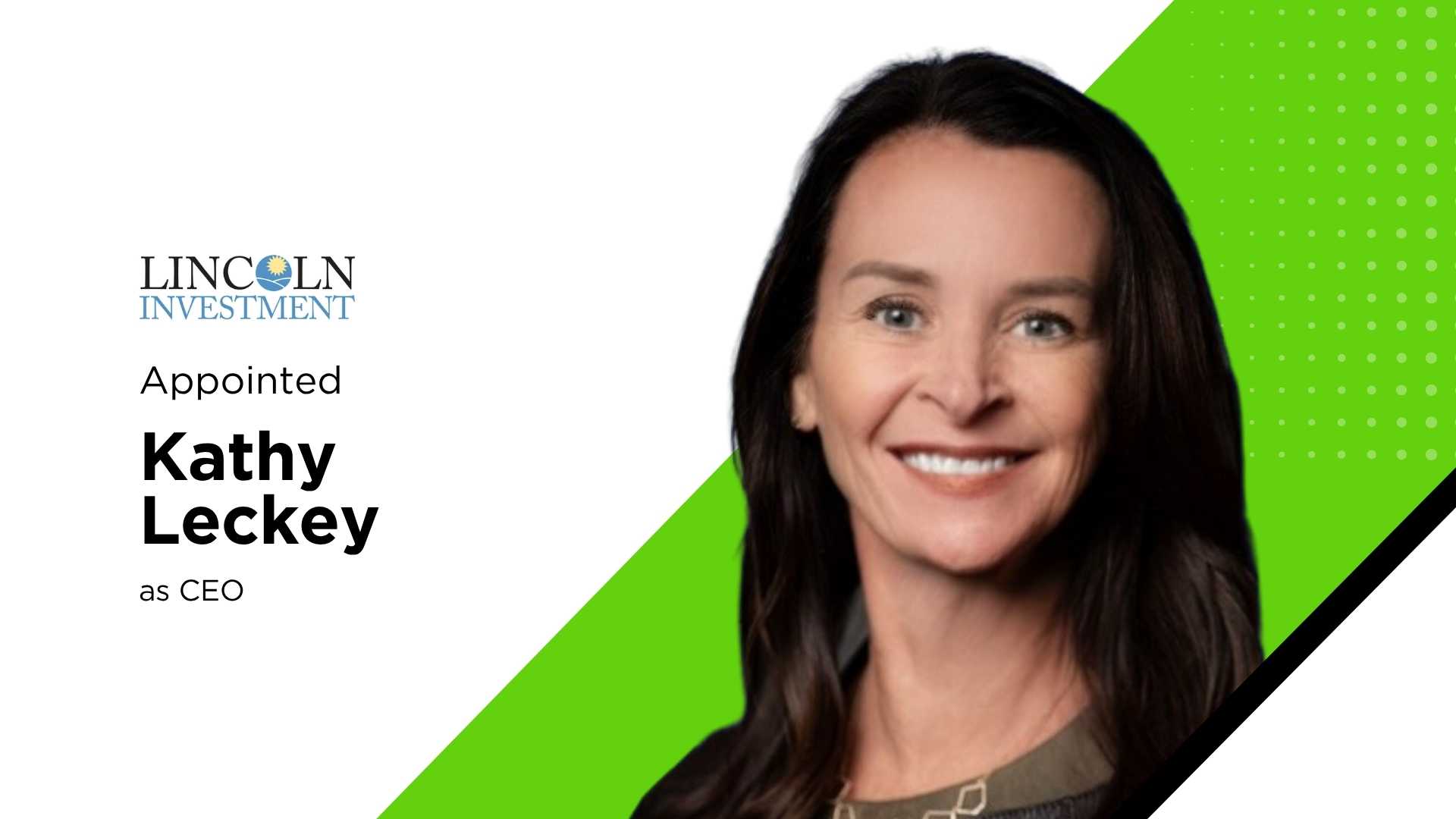
Lincoln Investment Planning, LLC announced a senior‑leadership overhaul that places longtime operating chief Kathy Leckey at the helm as chief executive officer, while founder‑CEO Ed Forst transitions to the role of Executive Chairman of the Board. The change, effective June 1 2026, marks the culmination of a multi‑year succession plan aimed at reinforcing governance, accelerating technology adoption, and sustaining growth across the firm’s $60 billion asset base and its network of roughly 1,000 independent financial professionals.
Leadership Change Signals Strategic Shift
The appointment of Leckey, who has served as president and chief operating officer since 2020, reflects Lincoln Investment’s intent to blend operational continuity with a forward‑looking technology agenda. Forst’s move to Executive Chairman preserves institutional memory and provides a governance layer that can steer the firm through tightening regulatory scrutiny and the rapid pace of fintech innovation.
Technology Stack and Platform Implications
Lincoln Investment’s platform—an integrated suite of digital payments, open‑banking APIs, and embedded‑finance services—has long been a differentiator for independent broker‑dealers seeking to compete with cloud‑native challengers. Under Leckey’s leadership, the firm is expected to double‑down on three technical thrusts:
- Open Banking Infrastructure – Expanding API connectivity to enable seamless data sharing with third‑party fintechs, mirroring initiatives from Google Pay and Amazon Pay.
- Embedded Finance Expansion – Embedding credit, insurance, and wealth‑management products directly into advisors’ client portals, a model championed by Microsoft’s Azure Financial Services.
- Blockchain‑Enabled Settlements – Piloting distributed‑ledger technology for faster, lower‑cost transaction settlement, aligning with industry pilots from IBM and Salesforce’s Financial Services Cloud.
These moves aim to reduce the firm’s average client‑onboarding time from 14 days to under seven, a metric that Gartner predicts will become a baseline for “digital‑first” broker‑dealers by 2027.
Competitive Landscape
Lincoln Investment now competes more directly with fintech‑native platforms such as DriveWealth, M1 Finance, and the embedded‑finance arm of Adobe’s Experience Cloud. While those rivals leverage pure‑cloud stacks, Lincoln’s hybrid model—combining legacy brokerage expertise with modern fintech APIs—offers a “best‑of‑both‑worlds” proposition for advisors who require regulatory depth and scalability. IDC estimates that hybrid broker‑dealer platforms could capture 15 % of the $10 trillion digital payments market by 2028, provided they can match the agility of pure‑cloud competitors.
Implications for Enterprise Marketing Teams
For B2B marketers, the leadership transition signals a shift toward data‑driven, omnichannel outreach. Leckey’s background in operational scaling suggests a forthcoming emphasis on AI‑powered client segmentation and personalized journey orchestration—capabilities that align with Salesforce Marketing Cloud’s latest financial‑services modules. Marketing teams will likely gain access to richer data streams via the firm’s open‑banking APIs, enabling more precise ROI measurement across digital‑payment campaigns and embedded‑finance upsells.
Regulatory and Governance Context
The fintech sector faces heightened oversight from the SEC and FINRA, especially around API security and blockchain compliance. By installing an Executive Chairman with deep regulatory experience, Lincoln Investment signals its commitment to proactive governance. This structure mirrors the “dual‑board” model adopted by leading banks such as JPMorgan Chase, where a separate oversight body monitors technology risk while the CEO drives innovation.
Future Outlook
If Leckey’s roadmap delivers on its technology promises, Lincoln Investment could set a new benchmark for independent broker‑dealers seeking to stay relevant in an era dominated by embedded finance and open banking. The firm’s $60 billion in assets under management, combined with a 57‑year operational history, positions it to influence industry standards—potentially shaping the next wave of fintech APIs that integrate directly with enterprise CRM platforms like Adobe Experience Manager and Microsoft Dynamics 365.
Market Landscape
The independent broker‑dealer market is at a crossroads. According to a Forrester study, 68 % of advisors plan to adopt at least one embedded‑finance product by 2025, driven by client demand for frictionless experiences. Meanwhile, Statista projects global digital‑payment volumes to exceed $10 trillion in 2026, underscoring the revenue upside for firms that can integrate payments, banking, and wealth‑management services.
Open banking initiatives by Google and Amazon have lowered the barrier to entry for fintech startups, intensifying competition for legacy firms. However, firms like Lincoln Investment that combine deep regulatory expertise with modern API ecosystems can leverage their scale to negotiate better terms with data aggregators and payment processors.
Top Insights
- Succession with Strategy – Leckey’s promotion couples operational continuity with a clear mandate to accelerate open‑banking and blockchain initiatives.
- Hybrid Advantage – Lincoln’s blend of legacy brokerage compliance and cloud‑native fintech APIs positions it ahead of pure‑play startups in regulated markets.
- Marketing Data Goldmine – Expanded API access will empower B2B B2B marketers to deliver AI‑driven, personalized campaigns across the advisor network.
- Regulatory Shield – Forst’s move to Executive Chairman adds a governance layer that can pre‑empt FINRA and SEC scrutiny of emerging blockchain settlements.
- Market Potential – IDC forecasts hybrid broker‑dealer platforms could claim 15 % of the $10 trillion digital‑payments market by 2028 if they execute on embedded‑finance roadmaps.
Get in touch with our fintech expert