FI Works has introduced new AI-powered capabilities for its Relationship Intelligence and Engagement Platform, allowing community banks and credit unions to query financial data using plain-language questions. The update combines natural-language analytics, predictive forecasting, automated insights and a shared semantic data model to address a longstanding banking technology problem: turning fragmented institutional data into trusted decisions.
For financial institutions, having access to customer data does not necessarily mean being able to use it quickly.
Core banking systems, lending platforms, digital banking applications and third-party services often maintain separate datasets and reporting structures. A seemingly simple question about customer profitability, product adoption or account attrition can therefore require analysts to reconcile information across multiple systems before a business leader gets an answer.
FI Works is attempting to reduce that friction with new AI-powered capabilities in its Relationship Intelligence and Engagement Platform.
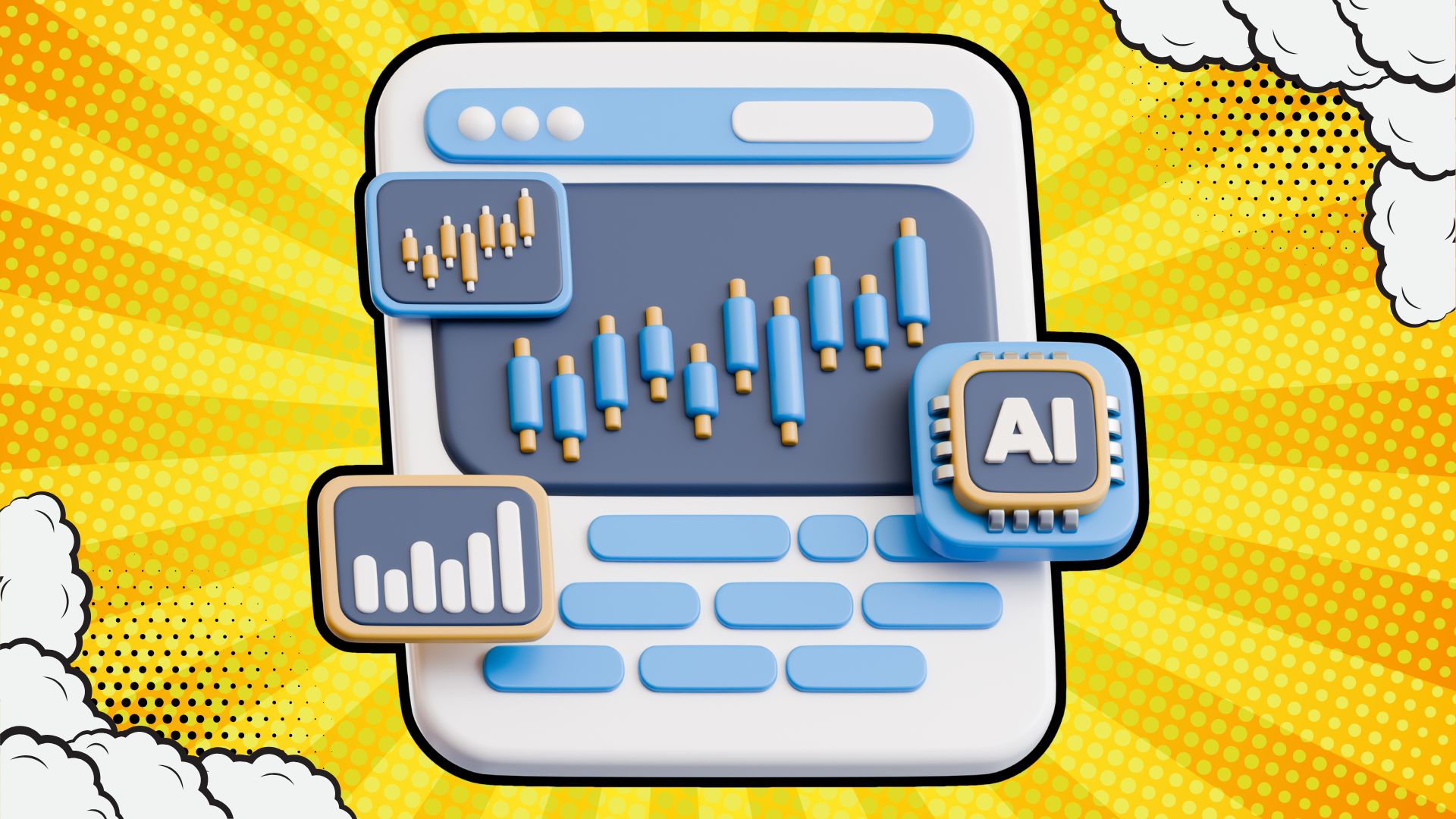
The company, which focuses on community banks and credit unions, has added natural-language search that allows users to ask questions about institutional data in plain English. The platform is designed to return answers within seconds, while automated insights, interactive dashboards and predictive forecasting provide additional ways for users to examine financial performance.
The development represents a broader change in banking analytics technology. Traditional business intelligence systems generally require users to understand predefined reports, dashboards or data structures. Natural-language interfaces are changing that interaction model by allowing executives, marketers, finance teams and branch employees to ask questions in more conversational terms.
But speed is only one part of the problem.
Financial institutions also need confidence that the answer is based on consistent definitions and calculations. An AI system that produces a fast answer from inconsistent data can potentially make decision-making more difficult rather than easier.
FI Works is addressing that issue through a unified semantic data model underneath its analytics, marketing automation and CRM capabilities. The model is intended to give different teams a common definition of metrics and customer information.
That architecture matters because financial institutions frequently calculate performance differently across departments. Marketing may evaluate customer value through engagement and product ownership, while finance may focus on profitability and allocated costs. Branch teams may use another set of operational indicators.
A shared data model can reduce those discrepancies by establishing common definitions before AI is asked to interpret the information.
FI Works also emphasizes transparency in how its calculations are generated. The platform allows users to inspect calculations, including profitability measurements that incorporate funds transfer pricing and allocated costs. According to the company, users can trace figures back to their underlying sources.
That feature addresses one of the more significant challenges facing AI in financial services: explainability.
A conversational interface can make data more accessible, but financial institutions still need to understand where an answer originated and how it was calculated. This becomes particularly important when analytics are used in executive reporting, financial planning or customer strategy.
The company says its platform can also surface trends, anomalies and performance drivers without requiring users to initiate a specific query. Predictive forecasting adds another layer by estimating future movements in balances, product adoption and customer attrition.
The combination moves the platform beyond conventional reporting toward what could be described as decision-support infrastructure.
Instead of waiting for a monthly report to identify declining balances or changing customer behavior, financial teams can potentially use continuously refreshed data to identify emerging patterns and determine where intervention may be useful.
That capability is particularly relevant to community banks and credit unions, where teams may have fewer dedicated data analysts than large financial institutions.
Bank Director’s 2025 Technology Survey, cited by FI Works, found that one-third of bank leaders identified an inability to use data effectively as a top technology challenge, while 56% said they rely on their core provider to access their data.
Those figures point to an infrastructure problem that AI alone cannot solve. If institutional data remains difficult to access, inconsistent across systems or dependent on a small group of analysts, adding a natural-language interface does not automatically create better decision-making.
The architecture underneath the AI therefore becomes just as important as the conversational interface.
FI Works is also connecting analytics with its marketing automation and CRM functionality. When the same data model supports those systems, an insight can potentially move directly into an operational workflow.
For example, profitability intelligence can identify valuable customers or households, after which marketers can create an audience or campaign without exporting data into a separate system. Branch employees can similarly receive opportunities based on the same underlying intelligence.
This reflects a broader trend toward embedded analytics and AI automation in banking. Rather than creating separate AI tools for analysis, marketing and customer relationship management, financial institutions are increasingly looking for platforms that connect intelligence directly to workflows.
The potential business impact extends beyond efficiency.
Customer profitability analysis can help institutions determine where marketing resources should be concentrated. Attrition forecasting can identify relationships that may require attention. Product-adoption analysis can reveal opportunities to introduce additional financial products.
However, these use cases depend on the accuracy and governance of the underlying data.
For community financial institutions, that requirement is particularly important because customer information can span deposits, lending, payments, digital interactions and marketing systems. Bringing those datasets together requires appropriate access controls, data governance and oversight.
The competitive landscape is consequently expanding beyond traditional core banking providers. Fintech vendors are increasingly competing to become the intelligence layer surrounding the core, connecting data from multiple systems and turning it into operational recommendations.
Natural-language interfaces are part of that transition. The long-term value will depend less on whether employees can ask an AI a question and more on whether the resulting answer is reliable enough to influence a business decision.
FI Works is positioning its platform around that distinction, combining conversational access with governed data, inspectable calculations and operational tools.
For community banks and credit unions, the objective is ultimately straightforward: shorten the distance between data, insight and action.
The emerging generation of banking analytics platforms will be measured not simply by how many dashboards they provide, but by whether employees can access trusted information quickly, understand how it was produced and use it directly within customer and financial workflows.
FI Works’ latest capabilities reflect that shift, bringing AI-powered analytics closer to the day-to-day decisions that determine customer engagement, profitability and retention.
Market Landscape
Banking analytics is moving from static reporting toward AI-assisted decision intelligence. Natural-language queries make institutional data accessible to a wider group of employees, while predictive models can identify potential changes in customer and financial behavior.
For community banks and credit unions, the underlying data architecture remains critical. Fragmented systems and inconsistent definitions can undermine AI outputs regardless of how sophisticated the interface becomes.
FI Works combines natural-language analytics with a semantic data model, CRM and marketing automation, creating an integrated approach in which insights can potentially become campaigns, audiences or assigned opportunities without leaving the platform.
Top Insights
- FI Works is adding natural-language analytics that lets community banks and credit unions query institutional data using plain English.
- Predictive capabilities forecast balances, product adoption and attrition while automated insights identify trends and anomalies.
- A shared semantic data model is designed to give marketing, finance and branch teams consistent definitions and calculations.
- Inspectable calculations allow users to trace financial figures to their underlying sources, supporting transparency in AI-assisted decision-making.
- Integrating analytics, CRM and marketing automation can shorten the path from customer insight to operational action.
Get in touch with our fintech expert