





Circle taps Microsoft veteran Kirk Koenigsbauer for board seat, reinforcing risk and governance focus
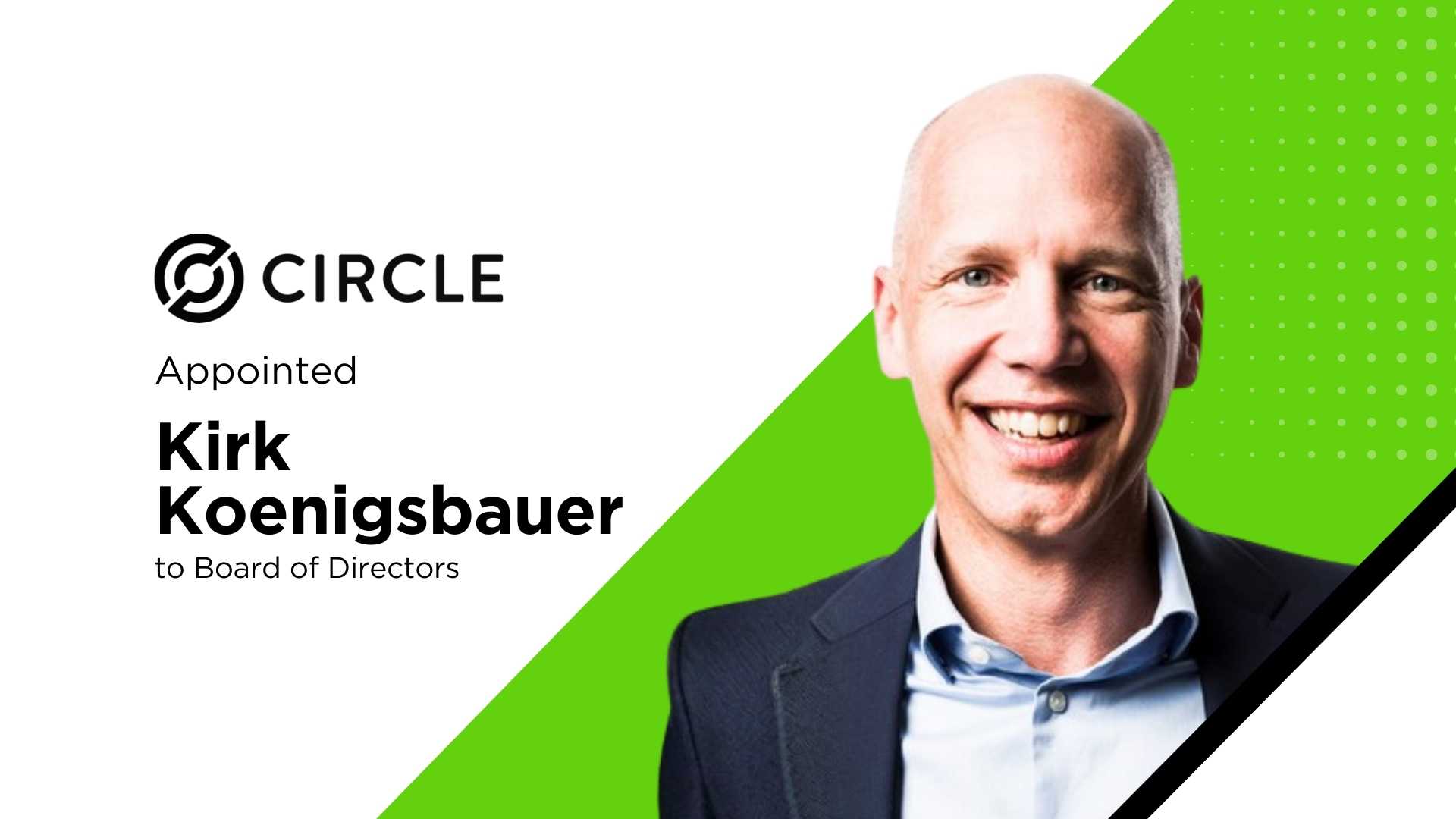
Circle Internet Group, Inc. (NYSE: CRCL), a publicly traded provider of internet‑based financial services, announced that it has appointed Kirk Koenigsbauer to its Board of Directors. The new director will sit on both the Compensation Committee and the Risk Committee, signaling a strategic emphasis on operational resilience and governance as Circle continues to scale its digital‑asset infrastructure.
Who is Kirk Koenigsbauer?
Koenigsbauer brings more than three decades of experience building, scaling, and securing large‑scale enterprise software. He currently serves as President and Chief Operating Officer of Microsoft’s Experiences and Devices Group, where his remit includes the development and delivery of Microsoft 365 and the AI‑driven Copilot suite. Prior to his current role, Koenigsbauer was instrumental in moving Microsoft Office to a subscription model, launching Office 365, and later integrating the suite into the broader Microsoft 365 platform. He also helped launch Microsoft’s Security business, overseeing the rollout of enterprise‑grade protection services that now protect millions of users worldwide.
His résumé includes senior leadership positions across Microsoft’s cloud and AI divisions, where he managed product roadmaps, global engineering teams, and go‑to‑market strategies. In addition to his corporate duties, Koenigsbauer has served on the board of Thomson Reuters since March 2020, giving him a perspective on governance in a heavily regulated, data‑intensive environment.
Circle’s board refresh: why now?
Circle’s leadership has framed the appointment as part of a broader effort to deepen the company’s risk management capabilities and sharpen its governance framework. Jeremy Allaire, Circle’s co‑founder, chairman, and chief executive officer, commented:
“Kirk has helped shape how the world builds, secures, and uses some of the most successful platforms and services. His experience scaling mission‑critical software platforms, building global security businesses, and driving operational excellence will be invaluable as Circle continues to strengthen its risk management, governance, and global enterprise capabilities.”
Allaire’s remarks underscore a growing recognition among fintech firms that the challenges of scaling digital‑asset platforms extend beyond product development to include robust compliance, cybersecurity, and board‑level oversight. By adding a technologist with a track record of overseeing cloud migrations and security rollouts, Circle appears to be aligning its board composition with the technical realities of operating a global financial infrastructure.
What the board committees entail
The Compensation Committee is responsible for setting executive pay structures, aligning incentives with long‑term shareholder value, and ensuring compliance with SEC disclosure rules. Meanwhile, the Risk Committee monitors the firm’s exposure to credit, market, operational, and cyber risks—areas that have become increasingly salient for companies handling stablecoins, tokenized assets, and cross‑border payments.
Koenigsbauer’s experience with Microsoft’s cloud transition is directly relevant. The migration of Office to Office 365 involved moving billions of documents and user accounts to a multi‑tenant, highly available environment—a process that required meticulous risk assessment, data governance, and incident‑response planning. Those same principles apply to Circle’s handling of custodial assets, real‑time settlement networks, and regulatory reporting obligations.
Microsoft cloud legacy: relevance to fintech
Microsoft’s shift from on‑premises software to a subscription‑based cloud offering reshaped the enterprise software market. The launch of Office 365 in 2011 introduced a model where updates, security patches, and new features could be delivered continuously, reducing the attack surface and improving compliance postures. Koenigsbauer’s leadership during that period gave him first‑hand exposure to the complexities of maintaining service level agreements (SLAs) across a globally distributed user base.
In fintech, where latency, data integrity, and regulatory compliance are non‑negotiable, the ability to design and operate resilient cloud architectures is a competitive advantage. Circle’s platform, which supports real‑time fiat‑to‑crypto conversions, stablecoin issuance, and payments APIs, relies on a similar cloud backbone. Koenigsbauer’s insights into scaling infrastructure, managing multi‑cloud strategies, and integrating AI‑driven risk analytics could help Circle tighten its operational posture and meet evolving regulator expectations around data residency and cyber risk.
Industry perspective: board expertise matters
Analysts have increasingly highlighted the importance of board composition in fintech, especially as firms navigate a patchwork of regulations ranging from the U.S. Treasury’s Office of Foreign Assets Control (OFAC) to the European Union’s Markets in Crypto‑Assets (MiCA) framework. A board that blends financial acumen with deep technical expertise can better anticipate regulatory shifts and embed compliance into product design.
“Fintech companies are moving from a ‘build‑first, worry‑later’ mindset to a more balanced approach that integrates risk and governance from day one,” said Maya Patel, senior analyst at FinTech Insights. “Bringing in someone who has overseen massive cloud migrations and security rollouts is a pragmatic step for any firm that wants to stay ahead of both market and regulator expectations.”
Koenigsbauer’s tenure on Thomson Reuters’ board adds another layer of relevance. Thomson Reuters operates in a heavily regulated information services market, dealing with data privacy, intellectual property, and cross‑border data flows. His experience there may translate into a nuanced understanding of how to navigate the regulatory labyrinth that surrounds digital‑asset platforms.
Potential impact on Circle’s roadmap
Circle has been expanding its suite of products, including the Circle Account, a banking‑as‑a‑service offering, and its stablecoin, USDC, which remains one of the most widely used digital dollars. The company’s recent earnings calls have emphasized a focus on operational scalability, risk mitigation, and expanding its global footprint.
With Koenigsbauer on the board, Circle may accelerate initiatives that require deep technical oversight, such as:
- Enhanced security protocols: Leveraging best practices from Microsoft’s security stack to harden Circle’s API endpoints and custodial environments.
- AI‑driven risk analytics: Applying Copilot‑style AI to detect anomalous transaction patterns, improve fraud detection, and streamline compliance reporting.
- Cloud cost optimization: Implementing multi‑cloud governance frameworks to reduce latency and improve redundancy across data centers in key markets.
While none of these moves are confirmed, the alignment of Koenigsbauer’s expertise with Circle’s strategic priorities suggests that the board will have a more hands‑on role in shaping technology‑centric initiatives.
Board dynamics and governance culture
Circle’s board now includes a mix of fintech entrepreneurs, institutional investors, and technology leaders. The addition of Koenigsbauer may shift the board’s dynamics toward a more technology‑first conversation, especially in the context of risk assessments that involve cyber‑threat modeling and infrastructure resilience.
Allaire’s quote emphasizes the value placed on “operational excellence,” a phrase that often translates into rigorous internal controls, clear escalation paths for incidents, and transparent reporting to shareholders. In practice, this could mean more frequent board‑level reviews of system uptime, penetration testing results, and third‑party vendor risk assessments.
Market reaction and shareholder sentiment
Following the announcement, Circle’s stock experienced modest trading activity, with analysts noting that the appointment does not directly affect the company’s financial outlook but could be viewed positively in terms of governance. “Investors appreciate when fintech firms proactively strengthen their board with domain experts,” said Luis Martinez, equities strategist at CapitalWave. “It signals a mature approach to risk, which is crucial for long‑term valuation.”
Outlook: a board move that could pay dividends
Circle’s decision to bring a seasoned Microsoft executive onto its board reflects a broader trend of fintech firms seeking to blend financial innovation with robust technical governance. As the industry grapples with heightened regulatory scrutiny, cyber‑risk concerns, and the push for global interoperability, board composition becomes a strategic lever.
If Koenigsbauer’s experience translates into tighter security, smoother scaling, and clearer risk frameworks, Circle could solidify its position as a trusted infrastructure provider for digital assets. The move also sends a signal to the market that Circle is committed to institutional best practices, potentially making it a more attractive partner for banks, payment processors, and enterprise clients looking to integrate stablecoin or crypto‑related services.
Bottom line content strategy
Kirk Koenigsbauer’s appointment to Circle’s Board of Directors adds a heavyweight with deep cloud, security, and AI credentials to a fintech firm that is rapidly expanding its digital‑asset platform. By placing him on both the Compensation and Risk Committees, Circle appears to be aligning executive incentives with a disciplined risk culture. The combination of Koenigsbauer’s Microsoft background and his board experience at Thomson Reuters could help Circle navigate the increasingly complex regulatory and cyber‑risk landscape that defines today’s fintech ecosystem. content strategy
Get in touch with our fintech expert