1. Employees across financial firms are using generative AI tools to support everyday work, sometimes without organizational approval. How significant is the challenge of Shadow AI, and what risks does it create for regulated businesses?
This manifests in two ways. The first is large tech vendors who have made tools readily available. While financial firms may block which GPTs cannot be used, they cannot prevent Google’s GPT which now sits smack in its search. The second and bigger risk is employees using GPTs on their own personal devices and transferring info back and forth to do it. This second risk is analogous in some ways to those raised through off-channel comms fines – use of unapproved channels and how best to police for those infractions. The precedent is insightful because many of the same controls can be extended to shadow use of GPTs. From a surveillance perspective, this means analyzing data leaving the firm, mentions of unapproved GPTs, and a breach framework that acknowledges (and can appropriately punish) these new scenarios.
2. What should an AI governance framework include to help firms understand which tools employees are using, what information is being shared, and whether those interactions create risks?
Start by treating AI use as a communications channel. Capture it within the firm’s domain so queries are archived and can be monitored. Restrict usage so only approved, firm-compliant versions are available on laptops and firm-issued phones. Any GPT should go through standard onboarding and third-party risk reviews like any other vendor. Then monitor the text being generated for abuse. Firms should also look at emerging controls that detect synthetic text and check whether it contains facts that aren’t real or guarantees that break firm policy. At most firms, nobody has connected AI usage to their existing surveillance and recordkeeping obligations, and that gap doesn’t get filled on its own.
3. What does a step-by-step approach to deploying agentic AI look like in a regulated environment? Should firms begin with limited workflows before expanding towards complex tasks?
Defining use cases. Controlling costs. Measurable, reliable outputs. A journey broken down into steps. An agent is only as trustworthy as the process it stands in for. If you can’t describe what it’s deciding, on what evidence and with what handoffs, you can’t govern it or explain it to a supervisor. So yes, start with narrow, well-scoped tasks where each agent leaves a record of how it reached its conclusion. Alert closure is a good example. The agent closes an alert the way a reviewer would, with a documented reason, and the firm can reopen it, spot-check it, and sample it. Get that right, and you’ve already done half the governance work.
4. Traditional surveillance struggle with regional languages, mixed-language conversations, slang, and context-specific expressions. How can these limitations affect a firm’s ability to identify misconduct or potential regulatory violations?
A lexicon fires on words. It doesn’t understand what was meant. We see this in English all the time: someone writes about “tweaking the contract,” and it turns out to be about a kitchen renovation, not a trade. Now put that conversation in Turkish, or have it switch languages partway through, and the gaps get much wider. If the system can’t read the language, misconduct in that conversation never surfaces. The firm ends up with false positives on the English it can read and blind spots on everything it can’t. Regulators have noticed.
5. With regulators such as FINRA and the NFA placing attention on firms’ supervisory responsibilities, what should they consider when assessing whether their surveillance systems provide adequate language coverage?
The NFA has had a string of findings around language coverage. The question they’re asking is simple. If someone is speaking in an unapproved language, “how would you know”? FINRA named language coverage as a focus area in its 2026 guidance. So firms should start by identifying which languages their people actually use with clients and counterparties, and which of those their surveillance can read in context. Then they need to be able to show a regulator how those conversations are captured, reviewed, and closed.
6. Despite growing interest in AI compliance tools, some U.S. financial institutions remain cautious about adoption. What are the main factors behind this hesitation?
Large U.S. institutions, asset managers in particular, have been slow to adopt AI. Part of it is the regulatory moment. Enforcement has been light, but regulators are pushing firms to innovate, and that opportunity is real. Part of it is governance. Whenever someone says AI, someone else is going to say governance, and firms want to know a tool can clear model risk management before it touches production. That’s a fair bar. The cautious firms are starting to move, and they’re choosing measurable platforms that let them innovate and show control at the same time.
7. The Mills Review has added to discussions around AI oversight and accountability in financial services. What should firms take away from these developments when reviewing their AI governance frameworks?
The Mills Review is written for retail financial services, but its principles travel. It pushes firms toward thematic review, looking across conversations, contexts, and time instead of waiting for a single alert. It also gets specific about where AI orchestration and automated steps can be trusted, and what has to be true for that trust to be earned. Most guidance until now has stopped at “innovate, but stay within the rules you already have.” For firms reviewing their frameworks, the Review gives them room to move, provided they can show their work.
8. Regulators such as the FCA are focused on whether firms can demonstrate that their surveillance controls are effective. What does this expectation mean for the way financial institutions design, test, and maintain their monitoring programs?
It means building the evidence trail as you go. I think about it in three layers. First, does the technology clear model risk management before it goes into production? Second, at the output level, can you see what the system produced, review it, reopen it, sample it, and expect consistency day over day? You shouldn’t see big swings in alert volume without a reason you can point to. Third, can a compliance officer look at reviewer SLAs, alert volumes, spikes and dips, and stay comfortable with what the system is doing? That third layer still has real work ahead across the industry. Firms also need to answer a question surveillance teams have lived with for years: how do you know what you missed?
Company info:
About Shield
Shield is the industry’s award-winning AI-powered, end-to-end Communication Risk Operating System (OS), purpose-built for regulated organizations. Built on a unified, cloud-based data foundation, it ensures a single source of truth for communications governance, allowing organizations to manage increasing regulatory complexity, strengthen oversight, and improve operational efficiency. Shield’s OS spans data ingestion, regulatory-grade archiving, discovery and investigations, surveillance, voice intelligence, and agentic AI capabilities within one platform, enabling regulated financial institutions to retain, investigate, supervise, and monitor communications across channels and languages.
Author’s Bio:
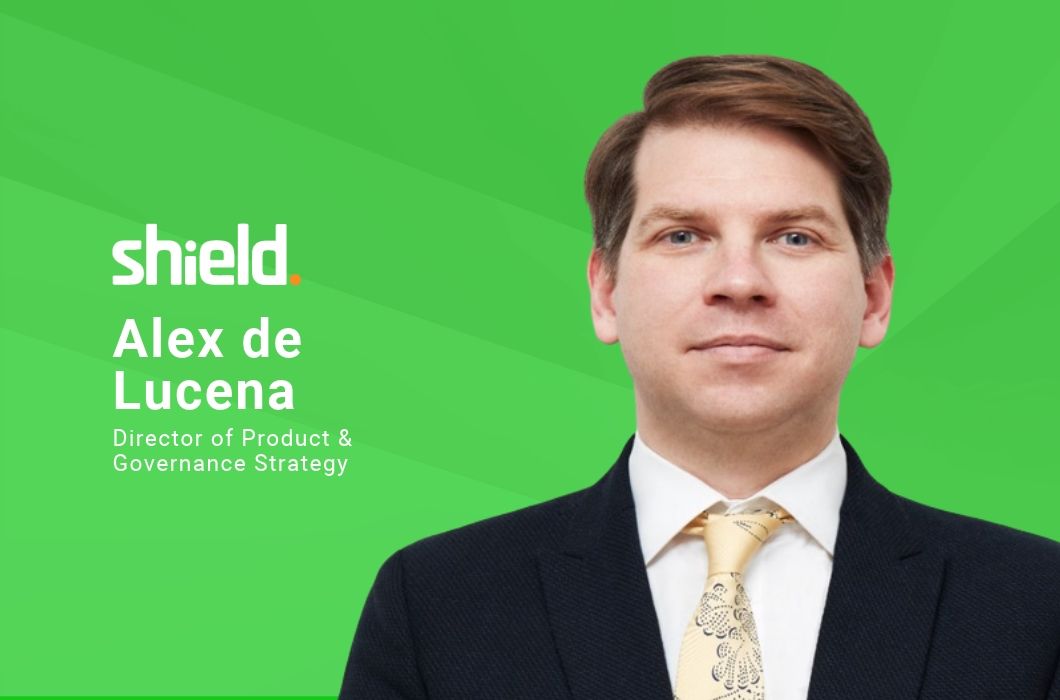
Alex de Lucena is a communications surveillance professional with 15 years of experience in the global financial services industry. He currently serves as Director of Product & Governance Strategy at Shield, focusing on AI-driven compliance, communications surveillance, regulatory governance, and risk management for financial institutions.