





Kroll Appoints Fred Crawford as Executive Chairman to Accelerate Global FinTech Growth
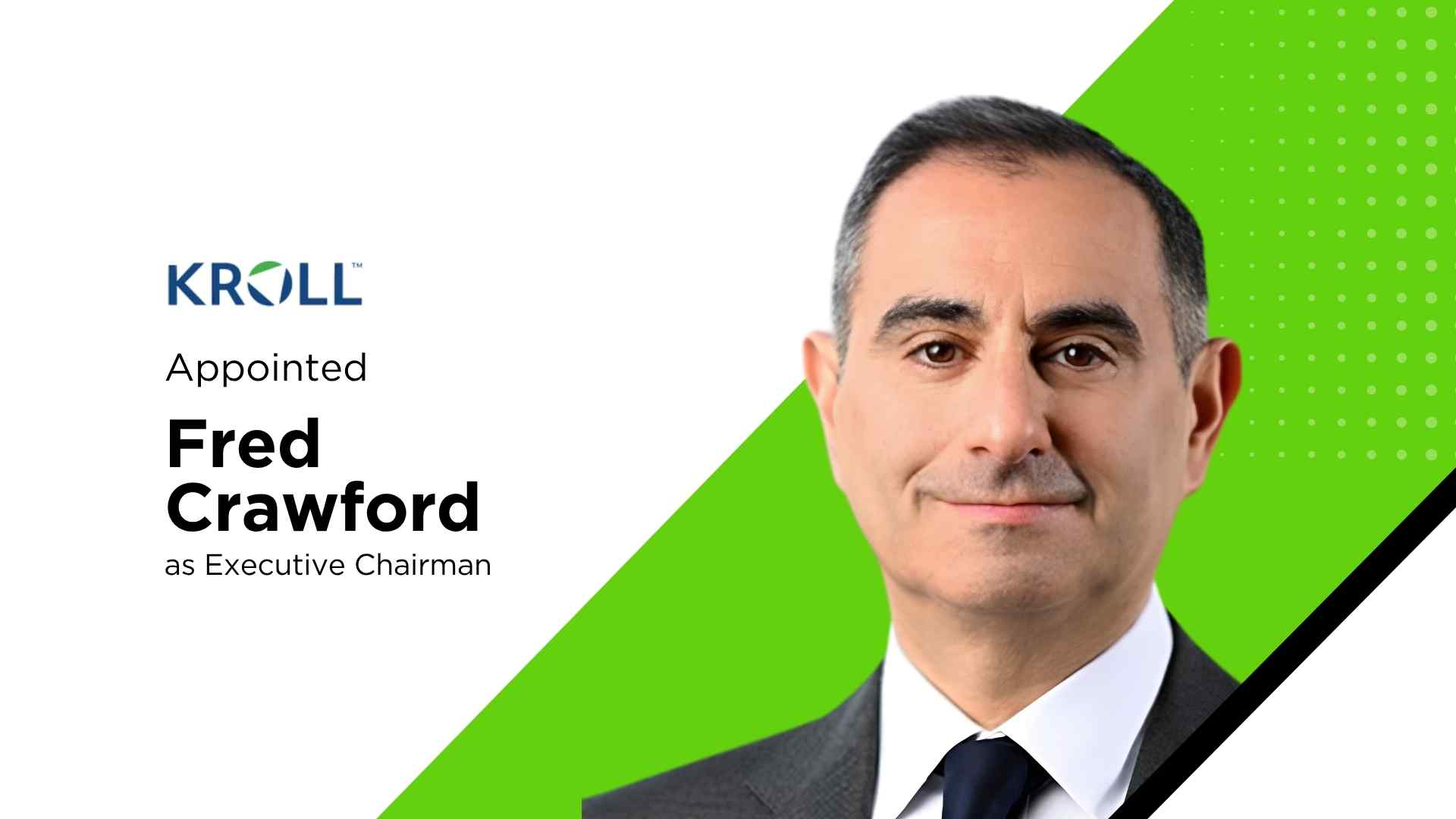
Kroll, the independent leader in financial and risk advisory solutions, announced today that veteran executive Fred Crawford will take over as Executive Chairman on May 18, 2026, signaling a strategic push to deepen the firm’s foothold in digital payments, open‑banking infrastructure, and embedded finance.
Kroll’s board confirmed the transition in a press release issued from New York on May 4. Current Executive Chairman Noah Gottdiener will step into a newly created Founding Chairman role, remaining involved in long‑term strategy while Crawford assumes day‑to‑day oversight of the firm’s growth agenda. Jacob Silverman stays on as CEO, and the trio will jointly steer Kroll’s expansion across the rapidly evolving fintech landscape.
Crawford brings more than three decades of experience scaling professional services firms. His résumé includes senior leadership stints at Computer Sciences Corporation (now DXC Technology), Ernst & Young, Capgemini, and a seven‑year tenure as CEO of AlixPartners, where he oversaw double‑digit revenue growth and a series of high‑profile acquisitions. He also serves on the boards of Phaidon International and Solomon Partners, giving him a broad view of talent‑driven growth models that Kroll hopes to replicate.
“Over the past two decades, Kroll has undergone significant transformation to drive growth and value creation,” said Silverman. “With this strong foundation in place, we see an opportunity to further accelerate our growth. We are confident Fred is the ideal addition to support building an even stronger Kroll, focused on expansion, maximizing long‑term value creation, and further enhancing our partnerships with our clients.”
The appointment arrives at a time when the fintech sector is consolidating around a few core technology pillars: digital payments platforms, open‑banking APIs, blockchain‑based settlement layers, and embedded finance services that allow non‑financial brands to embed credit, insurance, or banking directly into their customer journeys. According to Gartner, worldwide spending on digital payment solutions is projected to reach $2.9 trillion by 2027, a 12 percent CAGR driven by consumer demand for frictionless checkout experiences.
Crawford’s mandate centers on three operational levers. First, he will champion the scaling of Kroll’s commercial culture, aiming to convert its extensive advisory network into a more proactive sales engine. Second, talent development will be elevated, with an emphasis on hiring data scientists, data‑driven insights and cybersecurity specialists who can support clients navigating complex regulatory regimes. Finally, succession planning will be formalized to ensure continuity as Kroll integrates more than forty acquisitions—a figure that rivals the deal‑making pace of rivals such as Accenture’s Strategy & Consulting unit.
When asked about the broader market impact, Crawford noted, “When companies face material threats—whether financial, operational, or cyber—they call Kroll. Our global platform is a trusted advisor for the most complex challenges, and I look forward to partnering with Jake, Noah, and the full Board to deliver even greater value for clients worldwide.” His comment underscores Kroll’s positioning as a one‑stop shop for risk‑adjusted growth, a niche that differentiates it from pure‑play payment processors like Stripe or open‑banking hubs such as Plaid.
Industry analysts see the move as a hedge against the growing competitive pressure from tech giants. Microsoft’s Azure Financial Services and Amazon’s AWS FinTech offerings have been expanding APIs that enable banks to outsource core infrastructure, eroding the market share of traditional advisory firms. By bringing in a leader with a proven record of integrating disparate service lines, Kroll aims to stay ahead of the curve, offering bundled solutions that combine risk analytics, compliance monitoring, and embedded finance capabilities under a single contract.
For enterprise marketing teams, the leadership shift could translate into more robust data‑driven insights. Kroll’s enhanced commercial culture promises tighter alignment between advisory outputs and go‑to‑market strategies, enabling marketers to craft campaigns that reference real‑time risk assessments, regulatory trends, and consumer payment preferences. In practice, a retailer deploying an embedded financing option could leverage Kroll’s risk models to fine‑tune credit terms, reduce default rates, and improve ROI on acquisition spend.
Gottdiener, now Founding Chairman, added, “Fred’s appointment represents the company’s evolution and the opportunities ahead. He is a trusted advisor with a track record of successful client‑facing business development, including expanding commercial capabilities and strengthening client relationships.” The endorsement signals continuity in governance while opening the door for fresh strategic initiatives.
Overall, Kroll’s leadership overhaul reflects a broader industry trend: the convergence of risk advisory, digital payments, and embedded finance into unified service platforms. As enterprises seek to streamline vendor relationships and accelerate time‑to‑market, firms that can deliver end‑to‑end risk‑aware financial solutions are likely to capture a larger slice of the $2.9 trillion digital payments spend forecasted by Gartner.
Market Landscape
The fintech ecosystem is in the midst of a structural shift. IDC predicts that by 2028, 70 percent of financial institutions will have embedded third‑party services via APIs, up from 45 percent in 2023. Simultaneously, Forrester estimates that embedded finance will generate $7 trillion in incremental revenue for non‑financial brands over the next five years. In this climate, Kroll’s strategy to blend advisory depth with technology execution positions it to compete with both traditional consultancies and cloud‑native fintech platforms.
Top Insights
- Leadership infusion drives growth: Fred Crawford’s track record of integrating acquisitions is expected to accelerate Kroll’s revenue expansion beyond the 12 percent CAGR projected for the digital payments sector.
- Unified risk‑aware platforms gain traction: Enterprises are favoring single‑vendor solutions that combine compliance, risk analytics, and embedded finance, a niche where Kroll can outpace pure‑play fintechs.
- Marketing teams benefit from data integration: Kroll’s enhanced commercial culture promises richer, real‑time risk data that can refine customer acquisition and retention strategies.
- Competitive pressure from tech giants rises: Microsoft and Amazon’s forays into financial services underline the need for advisory firms to embed technology expertise, a gap Kroll aims to close.
- Market size validates the move: Gartner forecasts $2.9 trillion in global digital payments spend by 2027, underscoring the financial upside of Kroll’s strategic pivot.
Get in touch with our fintech expert