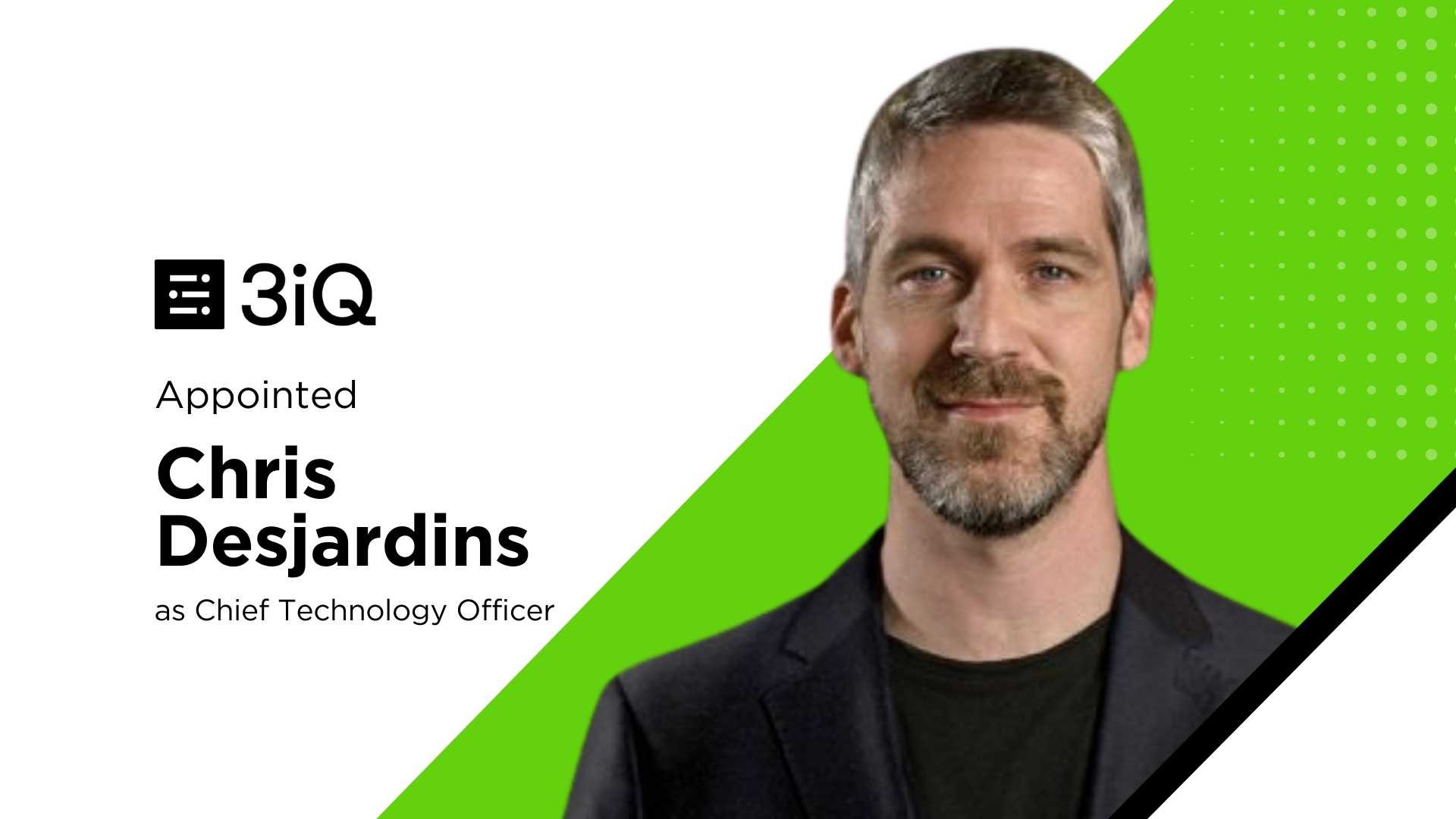
The Canadian fintech unicorn 3iQ has just bolstered its executive bench with a heavyweight from the world of artificial‑intelligence‑driven crypto infrastructure. Chris Desjardins, the former chief technology officer of blockchain‑exchange pioneer Binance.US, is stepping into the same role at 3iQ. The move is more than a headline‑grab—it signals a decisive push toward AI‑enhanced security, higher‑throughput trading, and a broader suite of services for institutional investors.
Why the hire matters now
3iQ, best known for its regulated crypto‑ETFs and the Future Fund, has been riding the wave of growing demand for “bank‑grade” digital‑asset solutions. Yet, the market is shifting fast: regulators are tightening, custodians are scrambling to meet “crypto‑grade” security standards, and AI is emerging as the differentiator that separates a boutique platform from a true enterprise‑class offering.
Desjardins arrives with a résumé that reads like a cheat‑sheet for the challenges ahead:
- AI‑first security architecture – He spearheaded Binance.US’s machine‑learning‑based fraud detection engine, cutting illicit transaction volume by more than 30 % in his tenure.
- Scalable order‑book design – Under his watch, the exchange’s matching engine was refactored to support 10‑million‑order‑per‑second spikes without latency creep.
- Cross‑chain liquidity orchestration – He built the “Liquidity Bridge,” an AI‑optimised routing layer that aggregates depth across multiple DEXs and CEXs, delivering up to 2× better price impact for large traders.
For a firm that already operates a regulated custodial platform, those capabilities could turn 3iQ into a one‑stop shop for everything from on‑ramp/off‑ramp compliance to high‑frequency institutional execution.
AI‑driven security: the new baseline
If a CTO’s first order of business is anything, it’s hardening the perimeter. The crypto‑space has seen a resurgence of sophisticated attacks—ransomware, “flash loan” exploits, and deep‑fake phishing campaigns that can bypass traditional rule‑based monitoring. Desjardins’ AI playbook promises a shift from reactive alerts to proactive threat hunting.
His team at Binance.US deployed a deep‑learning model that ingests 200+ telemetry signals per transaction—including wallet behavior, network latency, and even mouse‑movement patterns. The model assigns a risk score in real‑time, automatically diverting suspicious trades to a manual review queue. Early internal tests showed a false‑positive reduction of 45 % while catching a broader spectrum of anomalies.
Applied at 3iQ, this would not only protect the firm’s own assets but also give its institutional clients a “security‑as‑a‑service” veneer, an increasingly prized feature when onboarding hedge funds and family offices that demand iron‑clad custody.
Scaling trade throughput for the institutional era
The “institutionalisation of crypto” isn’t just a buzzword; it’s a data point. According to a recent CoinShares report, institutional inflows into regulated crypto products grew 85 % YoY in Q4 2023. Those investors need the same low‑latency, high‑capacity infrastructure they enjoy in equities and fixed income markets.
Desjardins’ work on Binance.US’s order‑matching engine is directly relevant. By refactoring the core matching logic into a micro‑service architecture backed by a purpose‑built in‑memory datastore, the exchange achieved linear scaling across commodity‑grade servers. The result was a 0.7 ms average latency, even under a 10‑million‑order‑per‑second load test.
If 3iQ integrates a similar stack, its crypto‑ETF and tokenised‑asset offerings could support real‑time NAV calculations and instant settlement for large block trades—features that are currently a competitive moat for incumbents like Coinbase Prime and Galaxy Digital.
Cross‑chain liquidity: the hidden value driver
Liquidity fragmentation is still the Achilles’ heel of crypto markets. While 3iQ’s current offering relies primarily on partnerships with traditional custodians and a few centralized exchanges, Desjardins’ “Liquidity Bridge” could broaden that pool dramatically.
The AI‑optimised routing layer taps into over 60 DEX aggregators and 20 CEX order books, dynamically re‑balancing order flow to where price impact is minimal. In practice, a $10 million purchase of Bitcoin on a 3iQ platform could be split across ten venues, each filling a slice of the order at the best available price.
That level of depth is a potent differentiator for asset managers who have been wary of slippage in large‑ticket crypto trades. It also opens the door for native tokenisation services—imagine a corporate treasury tokenising a portion of its fiat reserves on‑chain and instantly swapping it for a diversified crypto basket without a single manual step.
Market implications: a race to the AI‑enabled “bank of crypto”
Desjardins’ appointment puts 3iQ in direct competition with a handful of fintech veterans who are already leaning heavily into AI and cross‑chain tech:
- Coinbase Prime – Launched an AI‑driven risk engine in late 2023 that flags anomalous trading patterns across its institutional API.
- Galaxy Digital – Rolled out a “Liquidity-as-a-Service” platform that aggregates order flow from multiple venues, using reinforcement learning to optimise routing.
- Fireblocks – Expanded its secure transfer network with an AI‑based asset‑movement predictor that reduces settlement latency for high‑frequency traders.
By cherry‑picking proven components from these rivals and integrating them under a unified, regulated umbrella, 3iQ could accelerate its roadmap by months, if not years. The “bank‑of‑crypto” narrative—where a single provider handles custodial, compliance, execution, and settlement—is still nascent, but the pieces are falling into place.
What this means for the wider fintech ecosystem
Desjardins’ hire is a bellwether for a broader trend: AI is becoming the default layer of infrastructure for crypto‑focused financial services. Venture capitalists are already earmarking funds for “AI‑first” crypto startups, and regulators are taking notice that technology can help meet AML/KYC standards more efficiently than manual checks.
For technology vendors, the signal is clear—solutions that provide real‑time ML inference, low‑latency micro‑service orchestration, and cross‑chain data pipelines will see heightened demand. Cloud providers that can guarantee confidential computing for crypto workloads (e.g., Azure Confidential Ledger) will likely become strategic partners for firms like 3iQ.
Meanwhile, traditional banks eyeing digital‑asset entry points will need to choose between building in‑house AI stacks—a capital‑intensive gamble—or partnering with a platform that already has the AI‑powered engine baked in. 3iQ’s move tilts the scales toward partnership, at least for now.
A quick look at the timeline
| Milestone | Expected date |
|---|---|
| Integration of Binance.US‑style AI fraud detection | Q2 2024 |
| Launch of micro‑service matching engine for 3iQ ETF platform | Q3 2024 |
| Activation of cross‑chain Liquidity Bridge for institutional clients | Q4 2024 |
| Full “bank‑of‑crypto” suite (custody, compliance, execution, settlement) | Early 2025 |
Note: Dates are based on internal statements and typical development cycles for comparable fintech rollouts.
Bottom line
Chris Desjardins isn’t just a new name on the 3iQ org chart; he brings a toolkit that could transmute the company from a regulated fund manager into a full‑stack, AI‑enhanced digital‑asset bank. In a market where speed, security, and liquidity have become non‑negotiable, that kind of upgrade is a game‑changer.
If 3iQ can execute on this roadmap, it will not only deepen its moat against rivals like Coinbase Prime and Galaxy Digital but also set a new benchmark for what institutional clients should expect from a fintech partner in the crypto era.
Get in touch with our fintech expert