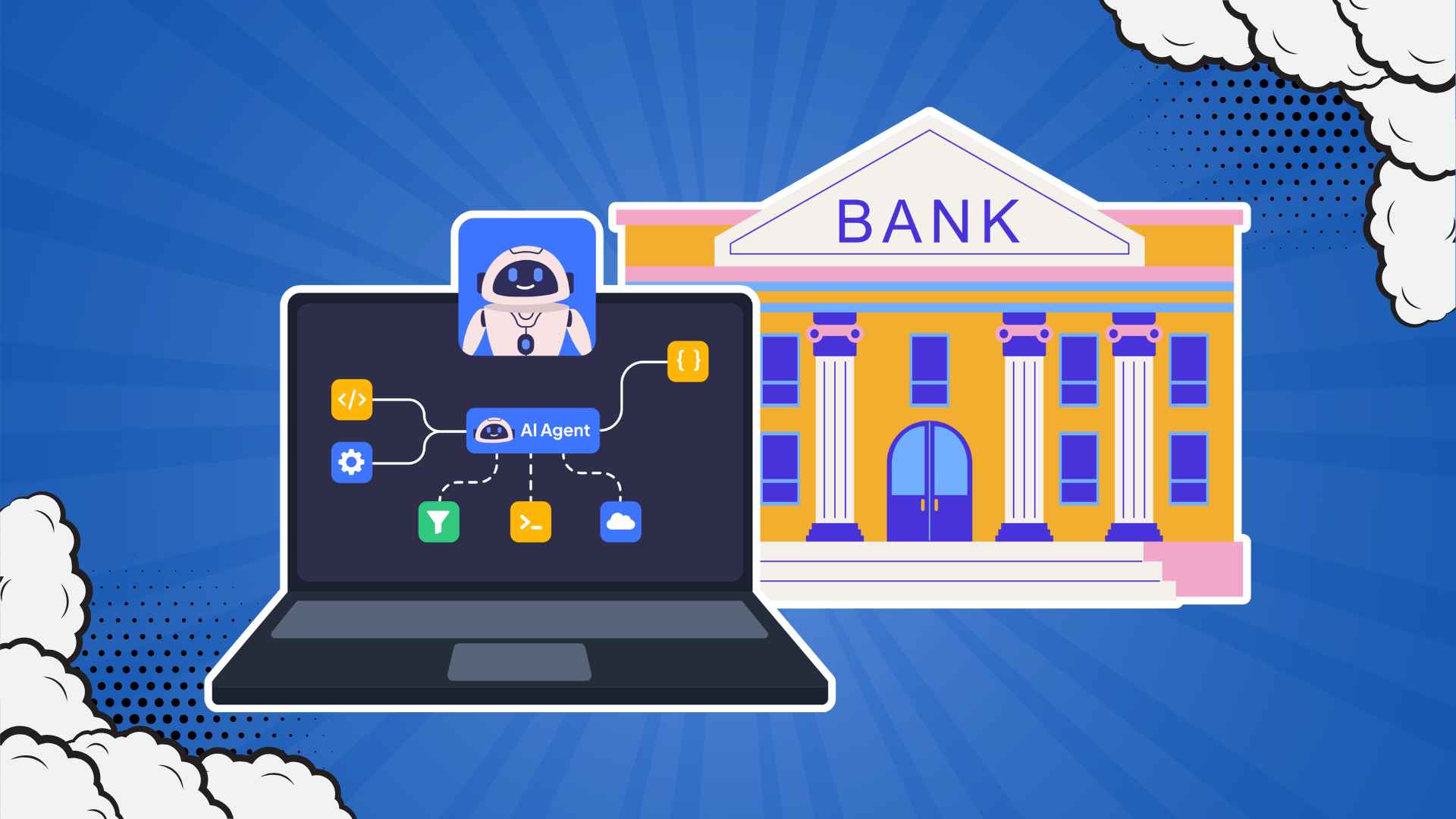
Stitch has launched Stitch AI, an agentic artificial intelligence framework integrated directly into its banking operating system, allowing financial institutions to automate operational tasks, configure banking products, and deploy custom AI agents within existing governance and approval structures. The platform introduces three components: Copilot, prebuilt Stitch Agents, and an Agent Harness for developing custom agents. The launch addresses a significant challenge in banking technology: moving AI beyond information retrieval and experimentation into operational systems where transactions, customer data, and financial decisions require strict permissions, oversight, and auditability.
Stitch Embeds Agentic AI Into Its Banking Operating System
Financial institutions have been experimenting with artificial intelligence to improve customer service, automate workflows, and support financial decision-making. However, moving AI projects from proof of concept into production remains difficult, particularly when agents need access to sensitive customer information or authority to execute banking operations.
Stitch is attempting to address this challenge with the launch of Stitch AI, an agentic AI framework built directly into its operating system for banks and financial institutions.
Unlike standalone AI assistants that connect to existing banking software through external integrations, Stitch AI is designed to operate within the underlying banking environment. Its objective is to let financial institutions deploy AI agents that can retrieve information, perform operational tasks, and manage workflows while remaining subject to institutional permissions, approvals, and governance controls.
The launch introduces three components: Copilot, Stitch Agents, and Agent Harness. Together, they cover employee assistance, operational automation, and custom AI agent development.
Three ways banks can deploy AI agents
Copilot: Natural-language banking operations
Stitch Copilot allows bank employees to interact with banking infrastructure using natural-language instructions.
Staff can request account and customer information, configure banking products, and update operational workflows without navigating multiple administrative interfaces.
The system supports product configuration across accounts, cards, and loans, including parameters such as transaction limits, pricing, fees, and eligibility requirements.
This approach could reduce the manual effort involved in routine banking administration. It also changes the role of conversational AI from answering questions to initiating operational changes within authorised boundaries.
Stitch Agents: Automation for banking workflows
The second component consists of ready-made AI agents designed for everyday financial institution operations.
Initial use cases include customer onboarding, credit decisioning, and collections. These agents operate within existing banking workflows, permissions, and institutional rules.
For banks, this model offers a potential route to automating repetitive activities without independently building and maintaining an AI agent for every operational function.
However, the impact on credit decisioning will depend on how institutions configure human oversight, approval requirements, and the treatment of sensitive financial information.
Agent Harness: Building custom financial AI agents
The third component, Agent Harness, provides an enterprise framework for banks to develop, configure, test, and deploy their own AI agents.
It includes permissions, approval mechanisms, guardrails, and audit trails intended to support controlled deployment in regulated financial environments.
This is particularly relevant for institutions with specialised workflows that cannot be addressed through standard prebuilt agents. Banks can develop agents around internal operational requirements while retaining control over their capabilities and execution permissions.
Why native AI integration matters for banking
A major challenge with enterprise AI adoption is the fragmentation of legacy technology environments.
Many financial institutions operate multiple core banking systems, customer databases, payment applications, and compliance tools. Adding external AI applications to these environments can require separate connectors, duplicated datasets, and additional security arrangements.
Stitch argues that this architecture limits what AI agents can accomplish. External systems may access incomplete copies of banking records but lack the authority to execute tasks directly within the underlying infrastructure.
Its approach is to embed AI into the operating system itself, allowing agents to interact with the same services that support banking products and operations.
According to the company, this removes the need for separate data copies and connectors to maintain.
The distinction is important because agentic AI requires more than access to information. An agent that can change account configurations, initiate workflows, or support lending operations needs carefully defined permissions and an accountable approval process.
Governance and data protection are central to the platform
Stitch has placed security and governance controls at the centre of its AI architecture.
Each agent receives its own identity and scoped permissions, alongside hard limits, maker-checker controls, and a full audit trail. The maker-checker approach introduces an approval mechanism in which one party initiates an action and another authorised party reviews or approves it.
The company also says sensitive information, including identification numbers, account numbers, telephone numbers, and addresses, is masked before information reaches an AI model.
Questions, actions, and approvals are logged with associated reasoning, giving risk and compliance teams a record of agent activity and authorisation.
Another feature is deployment flexibility. Banks can choose where Stitch AI operates, including in-country environments or private cloud infrastructure. They can also select their preferred AI model and switch models without rebuilding the underlying implementation, according to Stitch.
This flexibility could be relevant to institutions facing data residency requirements, internal security policies, and restrictions on external AI services.
Mohamed Oueida, CEO of Stitch, said many banking AI projects struggle to move beyond proof of concept because existing systems cannot accommodate autonomous operations within regulated approval structures. He described native integration and institutional control as central to the platform’s approach.
Competition shifts toward operational AI infrastructure
Stitch AI enters a financial technology market where enterprise software providers are increasingly embedding AI agents into operational applications.
Companies such as Microsoft, Salesforce, and NVIDIA are developing broader enterprise AI platforms and infrastructure, while banking technology providers are exploring automation across customer service, compliance, payments, and lending.
Stitch’s differentiation is its focus on embedding agentic capabilities within the banking operating system rather than positioning AI as an additional application layer.
That approach could appeal to financial institutions seeking to modernise operations without creating separate AI environments for every department.
Still, the announcement does not disclose customer deployments, measurable productivity improvements, independent security assessments, or details of model evaluation. These will be important considerations for banks assessing the platform’s suitability for production workloads.
Stitch has also launched an accompanying campaign, Anyone Can Be a Hero, with its first film available on the company’s website and two additional films scheduled for release later in the week.
Ultimately, the commercial opportunity for Stitch AI will depend on whether financial institutions can safely move from AI-assisted workflows to controlled agent execution. In banking, the ability to perform an action is only part of the requirement. Every action must also be authorised, explainable, traceable, and accountable.
Market Landscape
The launch reflects a broader transition from generative AI assistants toward agentic AI infrastructure in financial services.
Banking institutions are evaluating AI across several operational areas:
- Core banking automation: Natural-language configuration of accounts, cards, loans, and banking workflows.
- AI-powered lending: Supporting credit assessment, decision workflows, and lending administration.
- Customer onboarding: Automating information collection and account-opening processes.
- Collections automation: Supporting customer communication and debt recovery workflows.
- AI governance: Managing agent identities, permissions, approvals, audit trails, and data protection.
- Enterprise AI infrastructure: Deploying models within private cloud or jurisdiction-specific environments.
Stitch’s approach focuses on native integration with banking infrastructure. This differentiates it from standalone AI assistants that primarily retrieve information or depend on external connectors.
The broader competitive challenge will be demonstrating that agentic AI can deliver measurable operational improvements without increasing compliance exposure, security risks, or dependence on individual AI models.
Top Insights
- Stitch AI embeds agentic AI directly into its banking operating system, allowing financial institutions to automate tasks within existing governance structures.
- Copilot enables bank employees to retrieve information, configure financial products, and update workflows using natural-language instructions.
- Prebuilt Stitch Agents support onboarding, credit decisioning, and collections within institutional permissions and operational rules.
- Agent Harness provides a framework for banks to build custom agents with scoped permissions, approval mechanisms, guardrails, and audit trails.
- Stitch offers deployment flexibility through in-country and private cloud environments, alongside support for banks choosing and switching AI models.
Get in touch with our fintech expert